
Why Every Business Needs a Video Content Strategy in 2026
A few years ago, businesses created videos primarily for advertising, social media engagement or showcasing their products and services.
A corporate film for the website. A product launch video. A few Instagram Reels. Maybe an occasional interview with the founder.
But in 2026, video content serves a much bigger purpose.
It influences how customers discover businesses, understand their expertise, evaluate their credibility and eventually decide whether to work with them.
And with the growing adoption of AI-powered search platforms such as ChatGPT, Gemini and Perplexity, the way people discover information is evolving.
A potential customer might search for a solution on Google, watch an industry expert on YouTube, discover a company’s leadership team through LinkedIn or ask an AI assistant to explain which technologies are best suited to their business.
This creates a new opportunity for companies.
Video is no longer just a marketing deliverable. It is becoming an important part of a brand’s digital presence, search visibility and long-term content strategy.
However, simply producing more videos is not the answer.
What businesses need is a clear video content strategy.
What Is a Video Content Strategy?
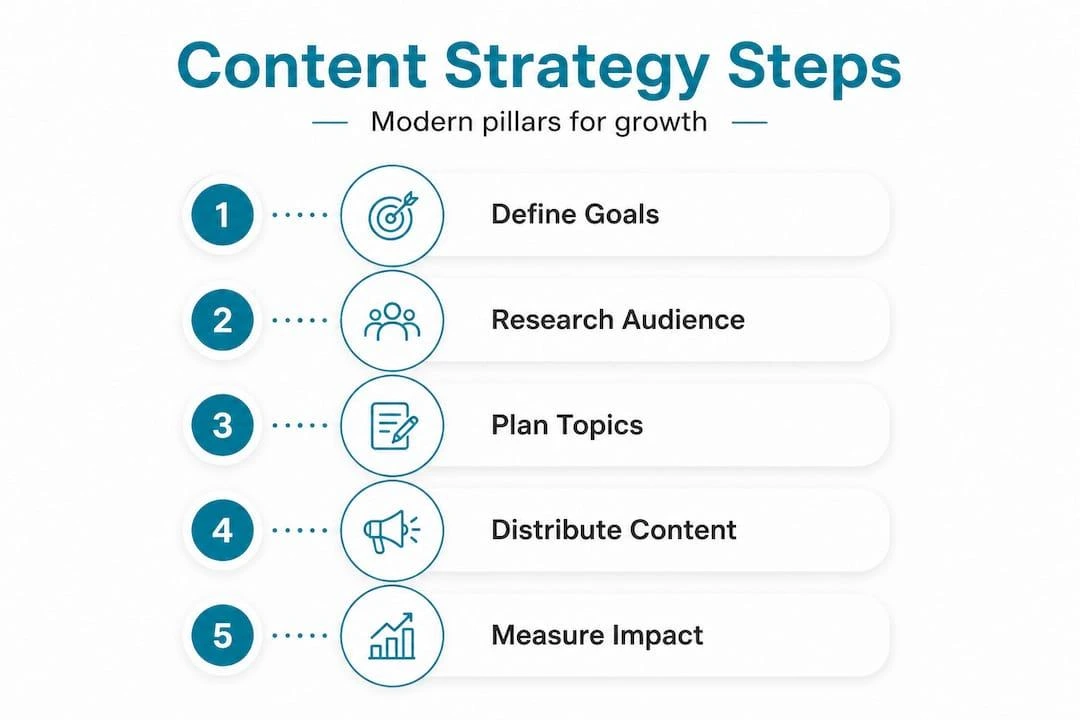
A video content strategy is a structured approach to planning, producing, distributing and measuring video content to achieve specific business objectives.
Instead of creating videos randomly or only when a marketing campaign requires them, businesses develop content around their audience’s interests, industry challenges and commercial goals.
A strong video content strategy typically includes:
- Audience research: Understanding who the business wants to reach and what information those people are looking for.
- Content planning: Identifying relevant topics, industry conversations and customer questions.
- Creative direction: Deciding how the brand should communicate its expertise through storytelling and visual content.
- Video production: Creating professional videos, interviews, explainers, podcasts and other content formats.
- Content distribution: Publishing and adapting videos for YouTube, LinkedIn, Instagram, websites and other relevant platforms.
- Performance analysis: Measuring engagement, discoverability, enquiries and other outcomes connected to business objectives.
The distinction is simple.
Video production creates the content. Video content strategy determines why that content exists, who it serves and what it should achieve.
A business can invest heavily in professional production and still struggle to see meaningful results if its videos are not connected to a larger strategy.
1. Your Customers Are Searching for Answers, Not Just Watching Advertisements
Think about how businesses research products and services today.
An IT director evaluating enterprise security solutions might search for “best cybersecurity solutions for large businesses.”
A company considering cloud migration might look for “how to move enterprise infrastructure to the cloud.”
A founder exploring artificial intelligence might ask, “How can AI improve business operations?”
These are not necessarily searches for advertisements.
They are searching for answers.
And businesses that create useful content around these questions have an opportunity to reach potential customers during the research process.
For example, a technology company specializing in cybersecurity could create videos explaining:
- What are the biggest cybersecurity threats businesses face in 2026?
- How can companies protect themselves against ransomware attacks?
- What is Zero Trust Security, and why does it matter for enterprises?
- How is artificial intelligence changing cybersecurity?
- What should businesses consider when choosing a cybersecurity solutions provider?

Each topic addresses a genuine question that potential customers or IT decision-makers might search for.
Rather than only publishing promotional videos about its products, the company can demonstrate its expertise by explaining industry challenges and helping businesses make informed decisions.
Over time, this creates a library of content that serves multiple purposes: educating audiences, supporting search visibility, building credibility and introducing potential customers to the brand.
The goal is not simply to publish more videos. It is to become a useful source of information within your industry.
2. Video Content Is Becoming Part of SEO and AI-Powered Search
Search is changing, and so is the way people discover businesses.
Earlier, companies primarily focused on ranking their websites on Google for relevant keywords.
Today, potential customers also discover brands through YouTube, social media platforms and AI-powered tools such as ChatGPT, Gemini and Perplexity.
This makes video content an increasingly valuable part of a business’s digital presence.
Search engines and AI systems can use different signals to understand what a video is about, including its title, description, captions, spoken content and surrounding information.
Their capabilities vary, and not every platform processes video in the same way.
But the larger shift is clear: video is no longer useful only to the people who watch it.
Consider a cybersecurity company whose CEO regularly discusses enterprise security, ransomware threats and AI-driven cyberattacks.
Each conversation gives the company an opportunity to demonstrate its expertise in subjects that potential customers are actively researching.
When that content is published with relevant context and distributed effectively, it can contribute to the company’s discoverability across digital platforms.
From Search Engine Optimization to Answer Engine Optimization

Traditional Search Engine Optimization (SEO) focuses on helping content appear in relevant search results.
Answer Engine Optimization (AEO) focuses on making information useful and understandable to systems that generate direct answers to user questions.
For example, a business leader might ask an AI assistant:
“What should enterprises consider before investing in cybersecurity solutions?”
An AI-powered search system may draw on relevant information from websites, articles, videos and other accessible sources, depending on its capabilities and retrieval methods.
A technology company that consistently publishes useful explanations about cybersecurity is building a stronger body of publicly available expertise than one whose digital presence consists entirely of promotional advertisements.
Of course, publishing videos does not guarantee that an AI platform will recommend or cite a particular business.
But it gives brands another opportunity to communicate their knowledge, answer relevant questions and become discoverable through different search experiences.
Why the Substance of Your Videos Matters
This also changes how businesses should think about video topics.
A generic promotional video might explain that a company provides cybersecurity solutions.
An informative video could explain how businesses can identify security vulnerabilities, what common mistakes organizations make or how emerging technologies are changing the industry.
The second approach provides more context about the company’s expertise.
It also addresses subjects that people are likely to research.
That does not mean promotional videos are becoming irrelevant. Brand films, advertisements and product launches still serve important purposes.
But businesses should balance promotional content with videos that educate, explain and contribute something meaningful to industry conversations.
In 2026, companies should think beyond how many people watch their videos and consider how effectively their content communicates what they know, what they do and why it matters.
3. A Single Video Shoot Can Become an Entire Content Campaign
One of the biggest mistakes businesses make is treating every video as a standalone project.
A company books a production team, films an interview, publishes the finished video and moves on to the next campaign.
But a strategically planned shoot can produce considerably more value.
Imagine a technology company recording a 60-minute conversation with its CEO about the future of artificial intelligence in business.

With the right preparation, that conversation could generate:
- One full-length interview for YouTube or the company website.
- One promotional trailer highlighting the conversation.
- Multiple short-form videos addressing individual industry questions.
- LinkedIn clips featuring leadership insights.
- Short vertical videos for Instagram and other social platforms.
- Written articles exploring the topics discussed.
- Carousels and quote graphics featuring key takeaways.
- Short clips that can be used in email campaigns or sales communication.
The number of usable assets will depend on the depth and quality of the original conversation.
But the principle remains the same.
One well-planned production can support weeks of meaningful business communication.
This is why content strategy should begin before the cameras start rolling.
The questions, talking points, visual approach and production setup can all be planned around the different formats the company wants to create.
Instead of thinking about the cost of producing one video, businesses can begin evaluating the overall value of the content generated from a single production.
4. Video Helps Businesses Build Trust Before the First Meeting
For many businesses, especially those operating in B2B industries, purchasing decisions involve considerable research.
Potential customers want to understand a company’s expertise, experience, capabilities and approach before initiating a conversation.
A website can describe those qualities.
Video can help demonstrate them.
A founder explaining the company’s vision, a technical expert discussing industry challenges or a customer sharing their experience can give audiences a more personal understanding of the business.

This is particularly relevant for industries such as technology, consulting, real estate, healthcare, finance and professional services, where credibility can play a significant role in purchasing decisions.
Consider the difference between reading that a company has extensive experience in cloud infrastructure and watching one of its specialists explain a complex migration challenge.
The video allows potential customers to hear how that specialist approaches the problem, communicates ideas and demonstrates their knowledge.
However, professional production quality alone does not create credibility.
The substance matters just as much.
A beautifully filmed interview with generic answers may communicate less value than a well-structured conversation that addresses real customer concerns.
Effective business videos combine genuine expertise, clear storytelling and professional execution.
5. Different Platforms Require Different Video Strategies
Another common mistake businesses make is publishing the same video everywhere without considering how audiences use each platform.
A full-length leadership interview might work well on YouTube.
A concise industry insight from that interview could be more suitable for LinkedIn.
A short behind-the-scenes moment might perform better on Instagram.
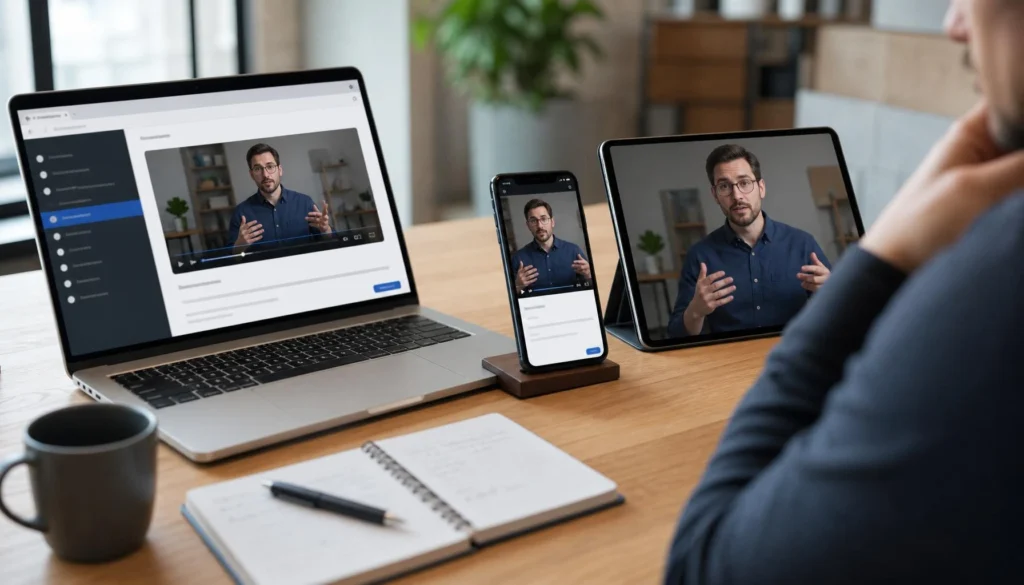
The message can remain consistent, but the presentation should reflect the platform and its audience.
YouTube: Building a Searchable Content Library
YouTube is particularly useful for educational videos, interviews, explainers, product demonstrations and long-form conversations.
Businesses can create videos around recurring customer questions and relevant industry topics.
Over time, this can develop into a library of content that remains useful beyond the original publication date.
LinkedIn: Establishing Professional Credibility
For B2B companies, LinkedIn provides an opportunity to share leadership insights, industry commentary, company developments and expert perspectives.
A short video explaining a specific industry challenge may be more relevant to potential business customers than a generic promotional montage.
Instagram and Short-Form Platforms: Creating Awareness
Short-form videos can introduce a business to new audiences, highlight useful ideas and showcase the people behind the company.
They can also encourage interested viewers to explore longer content or visit the company’s website.
Company Websites: Connecting Content With Business Objectives
A company’s website is where videos can be connected directly to service pages, product information, case studies and enquiry opportunities.
A relevant video can help visitors understand a service or business offering more clearly.
The key is to avoid treating each platform as a completely separate content operation.
Instead, businesses should build a coordinated distribution strategy that adapts their expertise for different audiences and formats.
6. Consistency Matters More Than Occasional Production
Many companies invest in a major corporate video once a year but have no consistent video communication between campaigns.
A brand film can serve an important purpose, but it cannot address every customer question, industry development or business announcement.
A sustainable video strategy creates a repeatable content system.
For example, a business might plan:
- One leadership conversation every month.
- A series of educational videos addressing customer questions.
- Regular short-form clips developed from existing recordings.
- Quarterly customer stories or case studies.
- Event coverage and behind-the-scenes content when relevant.
The objective is not to publish simply for the sake of being active.
It is to create a consistent flow of relevant content that supports the company’s goals.
And consistency does not necessarily mean daily posting.
For some businesses, four well-researched videos per month may create more value than 30 videos produced without a clear audience or purpose.
The right publishing frequency depends on the available resources, audience expectations and business objectives.
7. Businesses Need to Measure More Than Views
Views are an important performance indicator, but they do not tell the entire story.
A video with 100,000 views might generate very little commercial value if it reaches an audience unrelated to the business.
Meanwhile, a technical explainer with 2,000 views could be valuable if it reaches relevant decision-makers and contributes to qualified enquiries.
Businesses should evaluate video performance based on what they are trying to achieve.
For brand awareness, relevant metrics might include reach, impressions and audience growth.
For engagement, they might include watch time, audience retention and meaningful interactions.
For website performance, they might include organic search traffic, visits to relevant service pages and engagement with embedded videos.
For lead generation, they might include enquiry submissions, consultation bookings and qualified business opportunities.
For search visibility, businesses can also monitor which topics generate organic traffic and how their content appears across relevant search experiences.
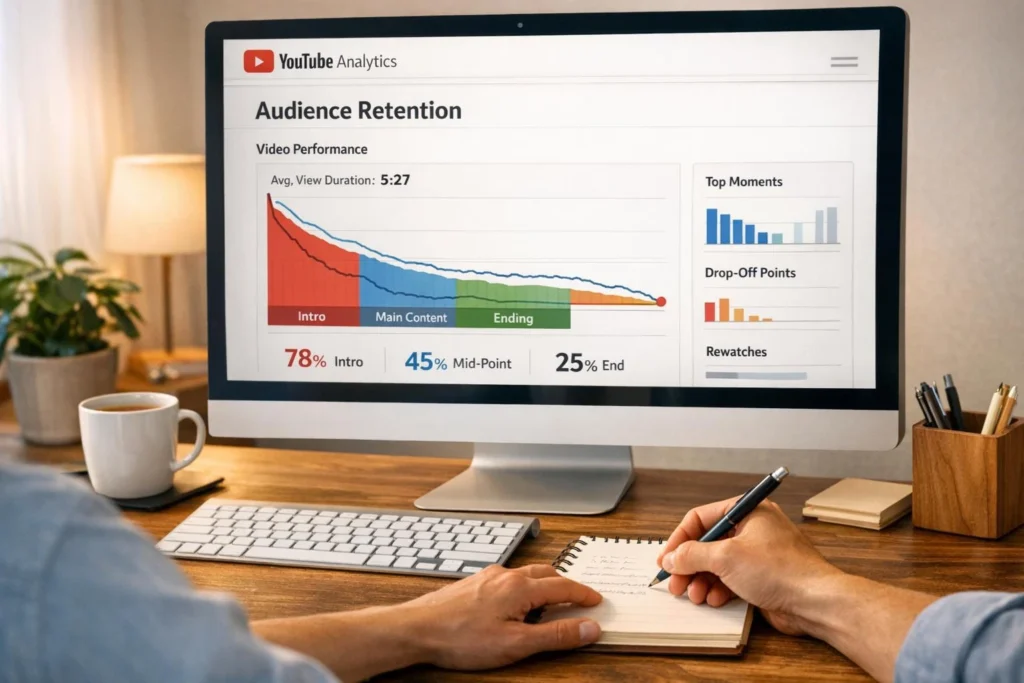
The important point is that performance should be evaluated in context.
A successful business video is not necessarily the one with the most views. It is the one that helps achieve the intended business outcome.
8. Why Professional Video Production Still Matters in an AI-Driven World
AI-powered tools are changing how videos are scripted, edited, captioned and repurposed.
Many routine production and post-production tasks can now be supported by automation.
But businesses still need to make decisions about what deserves to be communicated.
Which customer problems should the company address?
What expertise can its leaders genuinely contribute?
Which stories will resonate with its audience?
How should the brand communicate complex ideas clearly and accurately?
These are strategic and creative decisions.
Professional video production also contributes to how those ideas are presented.
Lighting, sound, camera composition, interviewing, directing and editing can all influence whether the final content feels credible, engaging and appropriate for the brand.
AI can support the workflow, but it does not remove the need for strong thinking, authentic expertise and thoughtful execution.
As video content becomes easier to produce, differentiation increasingly depends on the quality of the ideas and the way they are communicated.
How Can a Business Build a Video Content Strategy in 2026?
For a company developing its first structured video plan, the process does not need to be complicated.
Step 1: Define Your Business Objectives
Start by identifying what the videos should achieve.
Are you trying to increase brand awareness, educate potential customers, establish leadership authority, explain your services or generate qualified enquiries?
Different objectives require different approaches.
Step 2: Understand Your Audience
Identify the people your business wants to reach.
What challenges do they face? What questions are they asking? Which platforms do they use to research products and services?
These insights should influence your content topics.
Step 3: Identify Your Core Content Themes
Choose subjects that connect your business expertise with audience interests.
For example, a technology company might focus on industry education, product explanations, customer challenges and leadership perspectives.
A real estate company might prioritize market insights, property walkthroughs, investment education and customer experiences.
Step 4: Choose the Right Video Formats
Not every subject requires a full-length video.
Some ideas work best as short explainers. Others may benefit from detailed interviews, branded podcasts, product demonstrations or corporate films.
The format should support the message.
Step 5: Plan Production and Distribution Together
Before filming, consider how the content will be used across platforms.
This helps determine the production approach, framing, questions, graphics and editing requirements.
It also makes content repurposing more efficient.
Step 6: Measure, Learn and Improve
Once the videos are published, evaluate their performance against the original objectives.
Identify which topics attract relevant audiences, which formats encourage engagement and which content contributes to meaningful business outcomes.
Use those insights to improve future production.
A video content strategy should evolve as the business learns more about its audience.
Final Thoughts: Video Is No Longer Just a Marketing Deliverable
The conversation around business video content needs to evolve.
It is no longer enough to ask, “Should we create a corporate video?”
A more useful question is:
“How can video help our business communicate, educate, build trust and remain discoverable across the platforms our customers use?”
In 2026, a thoughtful video content strategy connects production with distribution, search visibility, audience needs and measurable business outcomes.
A single well-planned conversation can become a long-form video, a series of short clips, an article, a leadership insight and a resource that continues serving potential customers after the original publication date.
The real opportunity is not simply to create more content.
It is to create content that remains useful beyond the moment it is published.
At Studio YT, we believe effective video production begins with understanding the story a business needs to tell and the audience it needs to reach.
From corporate video production and branded podcasts to creative direction and content distribution, our focus is on helping businesses transform their ideas into professional, purposeful content.
Ready to build a video content strategy for your business?
Explore our services at StudioYT and discover how the right combination of storytelling, production and distribution can support your brand’s growth.